

Customer journeys aren’t linear. Even if the data shows they all converted through the same promotion, the path that took them there wasn’t. They zigzag through ads, emails, search results, landing pages and more.
Yet many analytics tools don’t take into account all the touchpoints that nurture customers. They still rely on first-touch or last-touch attribution — crediting only the starting point or final click.
This oversimplifies reality, leading to poor sales and marketing decisions.
Multi-touch attribution models offer a more balanced approach to valuing each touchpoint’s contribution. Tracking every meaningful interaction and the bigger picture helps you understand what truly drives conversions.
Let’s examine multi-touch attribution, how it works, and how Matomo can help you implement it.
What is a multi-touch attribution model?
A multi-touch attribution model (MTA) measures how every sales and marketing channel and touchpoint contributes to a conversion. Instead of crediting only the first-touch or last-touch attribution, MTA distributes the conversion credit across the entire customer journey.
Think of a shopper who first discovers a brand through a Google Ad. The next day, they read a blog via organic search, and a week later, they click on a Facebook ad. Finally, they buy after receiving an email promotion.
A first-touch model credits the Google Ad, and a last-touch model credits the email promotion. But both ignore the role of search, ads and other content and their contribution to the eventual conversion.
To fully understand the value of your sales and marketing efforts, you need to know how much each touchpoint contributes to the eventual conversion.
To solve this, multi-touch attribution distributes credit more fairly.
Offering a broader view, MTA reflects how real consumer journeys unfold. After all, people rarely buy after a single interaction. They move between search results, website visits, social media engagement and email interactions before deciding.
With Matomo’s Multi Attribution feature, you can track each of these steps and assign conversion credit fairly, helping marketing teams see what truly drives results.
Check out our Acquisition and marketing channels user guide FAQ for a deeper dive into other attribution tracking models in Matomo.
Multi-touch attribution vs single-touch attribution: Why single-touch attribution isn’t enough
Single-touch attribution models, like first-touch or last-touch, give all the conversion credit to just one interaction. These models are simple to apply and highlight either the entry point into the funnel or the final click before purchase.

Let’s look at an example.
Imagine a visitor first clicking a LinkedIn ad, later reading a product comparison blog, and then finally responding to a discount email.
- With a first-touch model, the LinkedIn Ad gets 100% of the credit
- With a last-touch model, the discount email does
But here’s the kicker. Neither view tells you how the blog helped nurture the decision.
That’s the limitation of single-touch attribution. It oversimplifies performance, especially in longer sales cycles.
As a result, companies often allocate a significant portion of their marketing budgets to the last-click channels that appear most profitable on paper.
In reality, marketing strategies depend on the combined effect of multiple touchpoints.
Multi-touch attribution models recognise this combined value. They spread conversion credit more fairly, showing how each step contributes, from awareness to consideration to conversion.
This gives marketing teams a more accurate picture of:
- What’s working
- Where to invest ad spend
- How to refine campaigns across channels
Types of multi-touch attribution models
While multi-touch attribution offers a more balanced view of marketing value, not all MTA models work the same way.
Let’s walk through the most common types of MTA models and what they bring to the table.
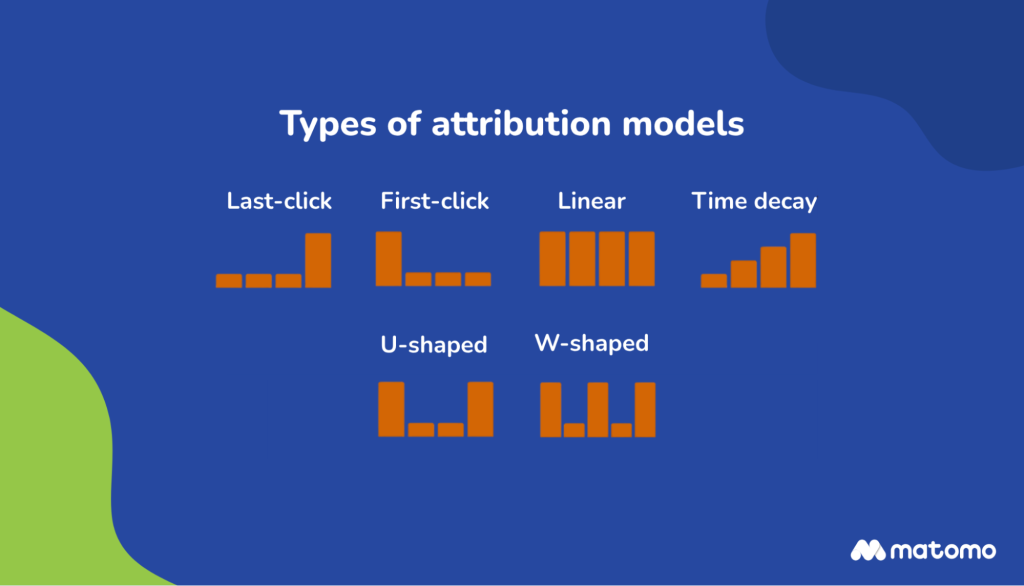
| Linear attribution |
| Best for: Long, research-heavy sales cycles |
This model treats every touchpoint as equally important.
For example, say a B2B buyer spends weeks researching. They click a LinkedIn ad, read a product comparison blog, attend a webinar and finally respond to a retargeting email.
Since each touchpoint contributed to their purchase, the linear model divides the credit evenly.
| Time-decay attribution |
| Best for: Short sales cycles |
A time-decay attribution model weights the conversion credit toward the most recent touchpoints. Earlier interactions still matter, but they carry less influence.
For instance, imagine a visitor spots a Facebook ad on Monday, forgets about it, but clicks a remarketing email on Friday and makes a purchase.
The time-decay model recognises the stronger role of the email in driving the final action.
| Position-based (U-shaped or W-shaped) |
| Best for: Multi-step sales processes |
Not every touchpoint is equal. Some push prospects forward in the funnel, while others simply build confidence or reinforce awareness. Position-based attribution models reflect this balance, focusing on milestone moments in the funnel.
- U-shaped attribution gives most of the credit to the first and last touchpoints.
- W-shaped attribution splits credit among three pivotal steps: the first interaction, a key mid-funnel event (like a form fill) and the last interaction.
Picture it like this.
A prospect first discovers your company through organic search and downloads a whitepaper via LinkedIn. This is their first real signal of intent.
Along the way, they read a press release and stumble on a blog about another product you offer. Those touches don’t directly relate to the purchase, but they act as trust signals, reinforcing credibility.
Later, they attend a webinar on a broader industry theme, which builds even more credibility. Finally, they respond to a sales email and convert.
In a U-shaped model, the organic search and the final sales email receive the most credit.
This model considers the two bookend touchpoints to be the most decisive. Discovery brings the buyer in, and the last interaction closes the deal. The whitepaper, press release, blog and webinar still count, but they receive minimal credit.
In a W-shaped model, the organic search, whitepaper download and sales email carry the most weight. These touchpoints mark the key milestones of discovery, active engagement and final conversion. The blog, press release and webinar still matter, but they’re treated as supporting steps. They’re valuable for trust-building but not decisive in the conversion.
Why multi-touch attribution leads to better marketing campaigns
Nowadays, marketing produces more data than ever. But volume doesn’t equal clarity.
Multi-touch attribution (MTA) does, though. Here’s how it helps show which interactions actually drive conversions.
Improves funnel analysis
Funnels aren’t linear. People don’t just click one ad and buy. Instead, they explore, compare, drop off and return.
MTA maps these movements across awareness, consideration and conversion. By spreading credit across touchpoints, it highlights which steps push users forward and where they get stuck.
Enhances attribution precision
Last-click models undervalue early touches like blogs, social media, and nurture emails. MTA distributes credit more fairly, helping to prove how those interactions fuel long-term conversions.
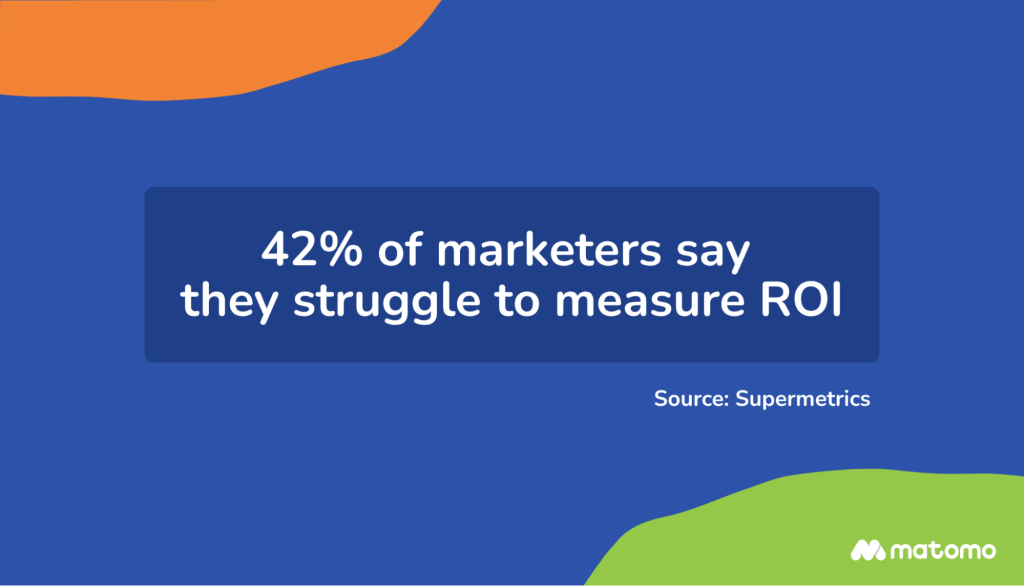
This is why MTA is so important. It helps you understand the merit of each marketing method, so your marketing efforts can support your sales team toward higher conversion rates.
Supports better budget decisions
Gut feelings and skewed metrics often drive marketing spending, but this is rarely the most efficient way to allocate budgets.
MTA replaces that guesswork with evidence. It shows which campaigns, channels and messages deserve more investment and which don’t.
Reveals cross-channel value
Search, social, email, referral, direct — customers rarely stick to one marketing channel.
MTA connects all marketing channels as part of a single journey, revealing how channels amplify each other. By showing the patterns between the channels, campaign planning becomes more strategic and connected, as you can see which parts of the journey harmonise.
Gives stakeholders clearer insight
Multi-touch attribution breaks down the customer journey so you can see more than the final conversion. You get to understand the sequence of touchpoints that influenced it.
This makes it easier for marketing teams to justify strategy and communicate success across departments.
This leads to deeper funnel insights and more informed budget decisions.
Common challenges with multi-touch attribution (and how Matomo solves them)
Multi-touch attribution is powerful, but it still comes with hurdles.
From fragmented data to privacy rules, these challenges often leave marketing teams with gaps in the story.
Here’s a quick overview:
| Challenges | Attribution strategies |
| Fragmented data | Matomo uses first-party cookies, UTM parameters, and anonymous visitor IDs. User ID tracking unifies logged-in users across devices for a complete view of the customer journey. |
| Privacy regulations | Matomo is privacy-first by design, and supports cookieless, anonymised tracking. In France, CNIL has approved Matomo for use without consent banners when configured with no personal data. |
| Consent limitations | Even if customers decline cookies, Matomo can still capture anonymous, high-quality behavioural data in cookieless mode — such as page views, clicks, downloads and referrers — where legally permitted. This helps preserve attribution accuracy while staying compliant. |
Now let’s dive deeper into these blockers and look at how Matomo can iron them out.
Fragmented data across sessions, channels and devices
Many analytics tools struggle to stitch together user journeys. Cookies — the small browser files that track who people are and what they do on a site — are device-specific, and session data often resets after a short period.
That means if someone first visits a site on mobile, later returns on desktop and finally converts without logging in, the system may count them as three separate visitors.
The result? Attribution reports end up incomplete or even misleading. Instead of giving you the whole picture, your reports won’t recognise the value of mid-funnel marketing work.
If a single customer’s three separate touchpoints look like three distinct buyers, it seems as though there are three different ways people are entering the funnel. When that happens, teams skew budget decisions toward the wrong touchpoints.
Matomo solves this by using first-party cookies, UTM parameters and anonymous visitor IDs to connect sessions across devices. It allows you to track logged-in users more accurately with User ID tracking, giving a unified view of the whole customer journey and making sure every meaningful interaction counts.
Consent and privacy limitations
The GDPR, ePrivacy Directive, and many other global regulations require consent before tracking personal data. That’s why most websites show consent banners. But if users click “no,” all tracking stops.
The problem here is that if you can’t track, you can’t run reliable attribution models.
Matomo addresses this hurdle through a privacy-first approach, including its cookieless tracking mode, which doesn’t store personal data in cookies. In France, the data protection authority (CNIL) has officially recognised this method as compliant, so if you configure Matomo that way, you don’t even need a consent banner.
In other countries, consent banners are still legally required. If visitors reject them, you can’t use cookies.
But with Matomo’s cookieless mode, you can still capture anonymous, high-quality behavioural data where regulations permit, like page views and session length. That way, even if some users reject cookies, you don’t lose sight of their key interactions in your attribution reports.
Data loss from cookie rejection
Consent banners offer customers an option to reject tracking, which skews your attribution models, as reports only reflect the behaviour of a subset of users.
The more people reject cookies, the less data is available to make decisions.
But with Matomo’s cookieless tracking mode and anonymisation features (like IP masking), you can still capture compliant, high-quality behavioural data. This preserves accuracy without over-reliance on cookies.
Multi-touch attribution tracking in Matomo
Matomo makes it easier to see which touchpoints really drive conversions.
Its Multi Channel Conversion Attribution plugin lets you assign conversion credit across every step of the journey — not just the first or last click.
Here’s how.
Built-in attribution reporting
Matomo lets you choose from multiple attribution models: linear, time-decay or position-based. This helps you see how credit is distributed across sessions, campaigns, keywords or referrers.
Reports show exactly which interactions influence conversion and in what order.
But unlike many other tools, Matomo doesn’t rely on data sampling. Insights are based on complete journeys, so you’re not extrapolating from partial datasets. This kind of high accuracy is essential when budget decisions and compliance are on the line.
Privacy-first by design
Matomo supports GDPR, CCPA and PECR when configured correctly.
The default tracking code must be configured to obtain consent before tracking. In France only, if you run Matomo in cookieless mode with no personal data, CNIL allows tracking without a banner. Elsewhere, you need banners.
In cookieless mode, Matomo uses a short-lived config_id (a 24-hour visit hash) rather than fingerprinting. That way, you can still capture anonymous behavioural signals while protecting users.
Flexible goal tracking
Matomo lets you define conversions that match your business logic, from purchases and downloads to newsletter signups.
You can create multiple goals and track how each marketing channel contributes. This avoids the “one-size-fits-all” trap and shows how different funnel stages affect outcomes.
Real behavioural insights
Matomo goes beyond page views. With Tag Manager, session recordings and heatmaps, you can track on-page actions like scroll depth, CTA clicks and video plays.
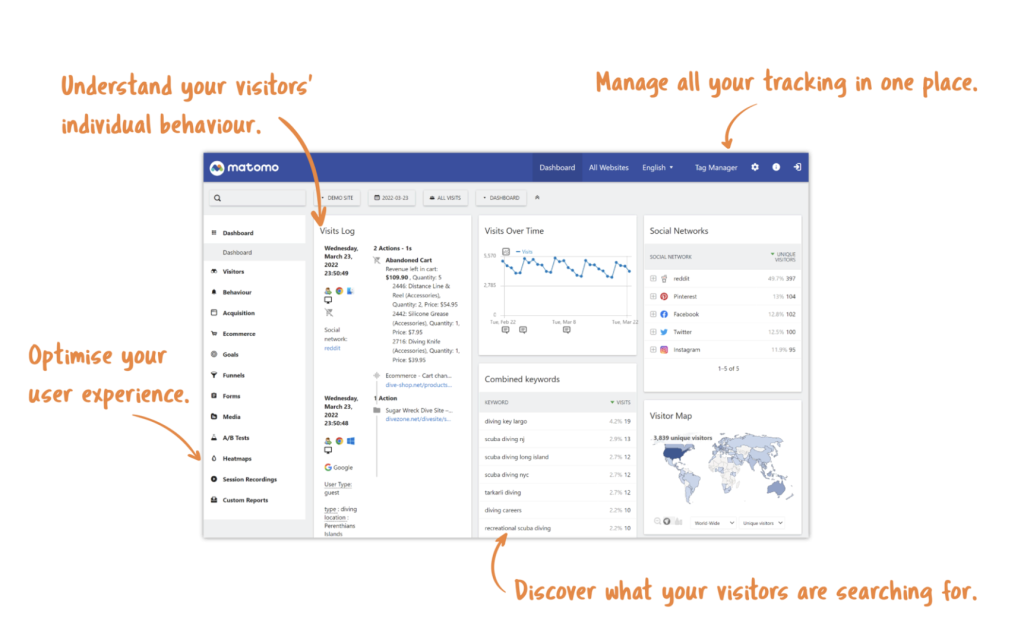
Matomo dashboard showing visits log, visitor map, search keywords, and real-time behavior panels
These behavioural signals feed directly into attribution reports, showing how on-page engagement connects to eventual conversions.
Cookieless, first-party tracking
The phasing out of cookies is problematic for companies that rely on third-party data.
With a privacy-centric platform like Matomo, you become more resilient to the phase-out of third-party cookies, as it’s easier to maintain accurate attribution while still supporting user privacy and compliance efforts.
Matomo uses first-party cookies (stored on your own domain) or its privacy-friendly config_id system, which is a limited-time, anonymised identifier that groups actions into visits without persistent fingerprinting.
Raw data access and API integration
With Matomo, you can export attribution data through the open Reporting API or connect directly to Looker Studio and Power BI.
This allows you to blend web analytics with CRM or offline sales data to measure long-term impact, without being locked into rigid dashboards.
Implementing multi-touch attribution in 5 steps with Matomo
It’s straightforward to set up with multi-touch attribution in Matomo.
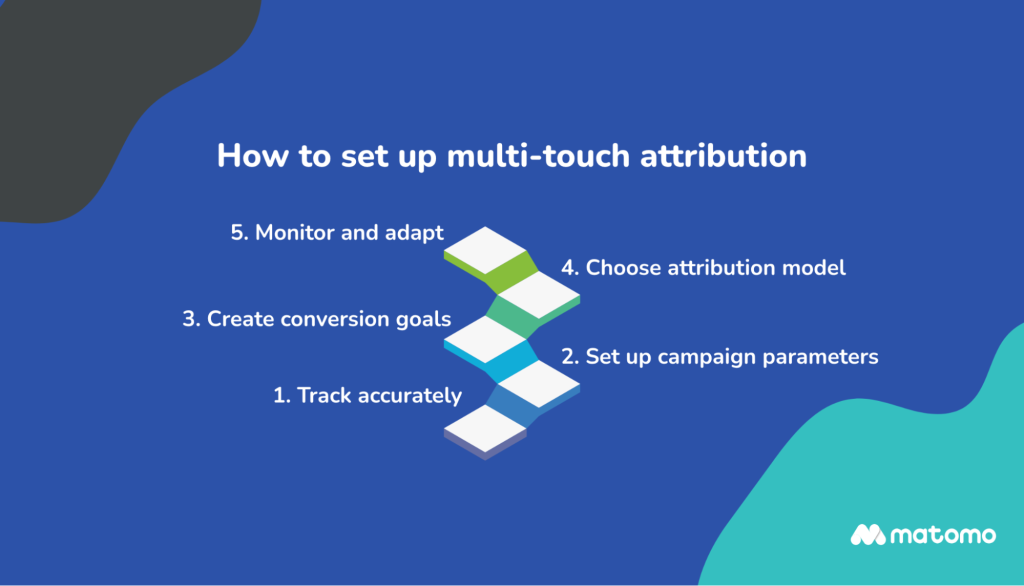
1. Start with accurate tracking
Use Matomo Tag Manager to track the actions that matter, such as:
- Page views
- Clicks
- File downloads
- Form submissions
You don’t need developer support to set this up, so you can begin collecting reliable data immediately.
2. Set up campaign parameters
UTM parameters let you trace visits from email campaigns, paid search ads and social media links.
Matomo automatically analyses these and connects them to your attribution reports to make sure that every marketing source gets the recognition it deserves.
3. Create conversion goals
Define what success looks like. Whether it’s a purchase, a whitepaper download or a lead form submission, you can set up conversion goals in just a few clicks. This ties every report back to meaningful outcomes.
4. Choose your attribution model
Select from linear, time-decay or position-based models to understand how credit is distributed across the funnel.
Matomo lets you compare models side by side, so you can test which best reflects your customer journey.
5. Monitor and adapt
You can view results in Matomo’s dashboard, set up scheduled email reports, or export raw data via the Reporting API.
With these insights, you can refine campaigns, optimise spending, and focus on what works.
| Multi-touch attribution implementation checklist |
| √ Start with accurate tracking |
| √ Set up campaign parameters |
| √ Create conversion goals |
| √ Choose your attribution model |
| √ Monitor and adapt |
Start modelling what matters
Multi-touch attribution helps you assign value across the full customer journey so that you can make smarter sales and marketing decisions based on the real levers.
With a keener eye on the role each touchpoint plays, you can more confidently make budget allocations and capitalise on the opportunities most likely to move the needle.
But don’t rely on outdated tools that only consider the first and last touchpoints.
Try Matomo. You can build privacy-friendly, multi-touch attribution reports without third-party tools or data risks. Start your 21-day free trial today to spot the sales signals you’re missing.